Resource
Recipe attribution: The item context behind more accurate fresh recommendations
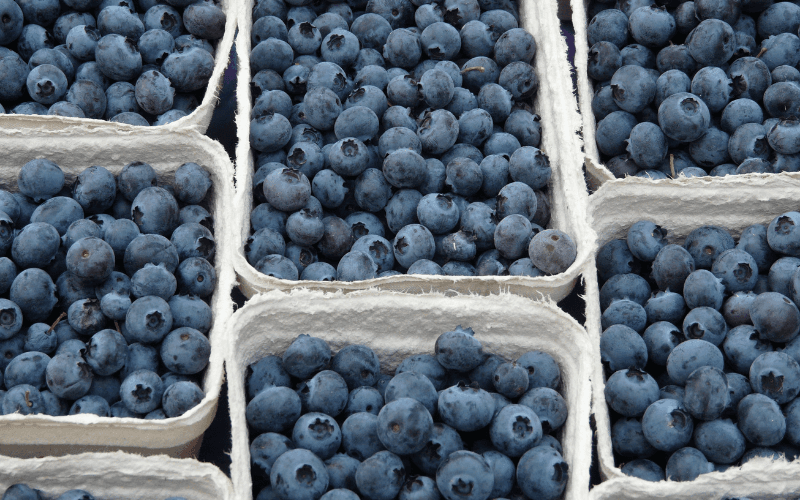
A store sells a mixed fruit cup but does not order one. It orders grapes, melon, and berries by the case, and a store associate cuts and packs them, which means a system that records only the sale of the cup never counts the demand for the grapes inside it.
What is recipe attribution?
Recipe attribution traces demand from the item a store sells back to the items it orders, using the recipe in between, and connects those ordered items to the production items they feed.
The sold item is what the customer buys: the cup, the kit, the sandwich.
The ordered item is what the store buys to make it: whole melons, bags of grapes, a case of chicken breasts.
It applies whether a sold item draws on many ordered items or on one, and whether those items come from one department or several:
A fruit cup draws on several ordered items: grapes, melon, and berries.
A ready-to-cook kit with a seasoned chicken breast and broccoli draws on items from two departments: meat orders the chicken and produce orders the broccoli.
Oven roasted turkey can end up in sourdough sandwiches and croissant sandwiches, so one ordered item feeds several sold items.
What goes wrong when demand isn’t traced?
Ordering and production planning systems typically work from separate records, one of what the store ordered and one of what it sold, and nothing links an ingredient order to the items produced from it. Suppose a store sells many fruit cups. The production recommendation follows those sales and asks the department to make more cups, but the register shows few sales of grapes as grapes, so the grapes that went into cups appear to have disappeared and the grape order is built on too little demand. The department is then asked to make cups it does not have the ingredients for, and the cups run out, even though both the sales and the shortage are real.
Why doesn’t a recipe on paper fix it?
A recipe is written for the kitchen, so it states what goes into the sold item but leaves out much of what a system needs. It does not say which ordered item was used, since a recipe that calls for grapes may mean red and green seedless grapes in one store and red, green, and black in another, leaving the cup the same while the items ordered differ. It does not say how much of an ordered item is usable, since rind and trim never reach the cup and a store must therefore order more melon than the cup weighs. And it does not say whose order the demand belongs to: a ready-to-cook kit with a seasoned chicken breast and broccoli sells as one item, yet the chicken is a meat order and the broccoli is a produce order, so unless the kit’s sales are traced back to both, neither department’s recommendation reflects the demand the kit creates.
What does that do to ordering and production?
Every recommendation starts from demand, so missing demand pushes a recommendation off in one direction or the other. When demand is undercounted, ingredient orders fall short of what the department needs, and because production recommendations still follow cup sales, the department is asked to make cups that it lacks the grapes for and the cups go out of stock. When a recipe understates how much of an ordered item is usable, as it might for cut watermelon, the system orders into a full cooler and the extra becomes shrink. Store teams often respond by overriding the recommendation, since they can see the problem on the floor and the system cannot, and overrides of that kind are frequently a symptom of missing context rather than a stubborn team.
How does Afresh trace demand through cut and prepared items?
Afresh uses recipe attribution models to trace demand from each sold item back to the ordered items behind it, using the recipe’s quantities and yield, and to connect those ordered items to the production items they feed. Consider the fruit cup, whose recipe calls for grapes. One store orders red and green seedless grapes and another orders red, green, and black, with the cup weighing about the same in both, and the tracing carries that difference through so that when a cup sells, the demand goes back to the grapes that store actually ordered. A cup of cut watermelon involves one sold item and one ordered item, but its recipe still carries the yield, which converts cups sold into whole melons needed. A ready-to-cook kit shows the same tracing across departments: each kit sold converts into an amount of chicken breast and an amount of broccoli, adjusted for each one’s yield, with the chicken demand going to the meat order and the broccoli demand to the produce order.
Because that demand is more accurate and the ordered items are connected to production, ingredient orders reflect what production needs. The result feeds both the ordering recommendation and the production plan, so each rests on the full demand behind every sold item instead of only what rang up under that item.